Why Photorealistic Renderings Are the Smartest Investment Before You Build
There is a moment in almost every architecture or interior design project when a client stares at a set of floor plans and says: “I can see the layout, but I can’t really picture it.” That gap between technical documentation and lived experience is exactly what photorealistic renderings are designed to close.

Whether you’re a homeowner planning a major renovation, a developer pre-selling units, or an investor evaluating a proposal, renderings do something that drawings simply cannot: they show you what the finished space will actually feel like.
What Is a Photorealistic Rendering?
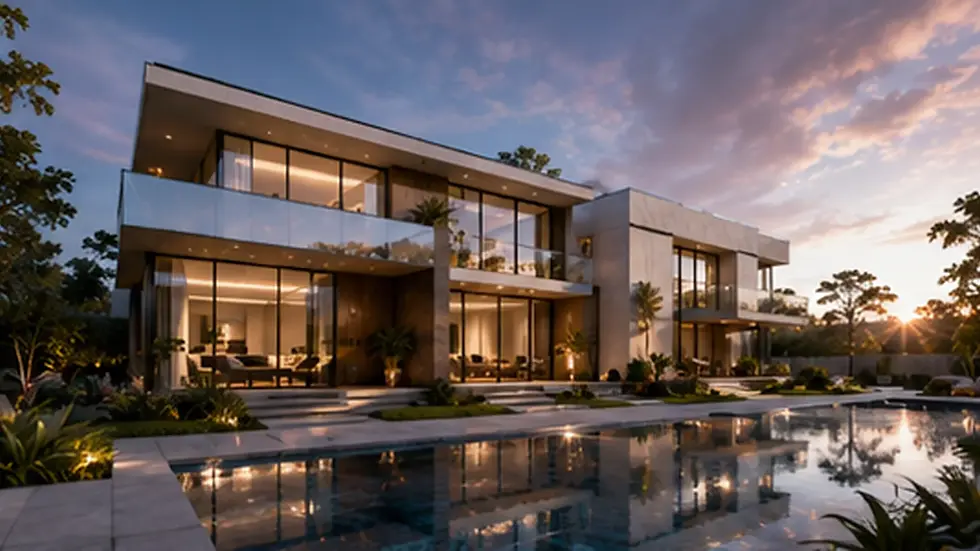
A photorealistic rendering is a computer-generated image that simulates how a designed space will look under real-world lighting conditions, with actual materials, furniture, and finishes in place. Unlike schematic drawings or 3D wireframes, a high-quality rendering is visually indistinguishable from a photograph of the completed space.
Modern rendering software ( tools like D5 Render, Lumion, V-Ray, and Enscape ) uses physically accurate light simulation to replicate how sunlight enters a room at different times of day, how materials reflect and absorb light, and how shadows fall across surfaces. The result is an image that communicates not just space, but atmosphere.
5 Reasons Renderings Are Worth the Investment

1. Clients Understand What They’re Approving
When clients can see a space - really see it, with their furniture scale, their material choices, their light - they make faster, more confident decisions. Ambiguity disappears. The number of revision cycles drops. Projects move forward.

2. Design Problems Surface Before Construction Begins
A photorealistic image reveals things that technical drawings can’t. A ceiling that feels lower than expected. A window that doesn’t align with the view. A material combination that looks jarring in context. These issues, spotted in a render, cost almost nothing to fix. Spotted on site, they can mean costly change orders or permanent compromises.

3. Pre-Sales and Marketing Become Dramatically More Effective
For developers, renderings are not a nice-to-have - they are a sales tool. Off-plan projects with photorealistic visuals consistently sell faster and at higher prices than those presented with floor plans alone. Buyers and investors respond to clarity. They commit to what they can see.

4. Investor and Lender Confidence Increases
Capital follows clarity. When you present a project to investors, bankers, or planning committees, a high-quality render signals that the vision is fully realized - not still forming. It positions the project as credible, considered, and ready to execute.

5. You Differentiate Your Project in a Crowded Market
Every developer and architect has floor plans. Not every one invests in renderings that genuinely capture the experience of a space. A strong visual identity - coherent, atmospheric, aspirational - makes your project memorable in a way that technical documentation never can.
What Makes a Rendering Photorealistic?
Not all renderings are created equal. The difference between a generic 3D image and a truly photorealistic render comes down to lighting accuracy, high-resolution material textures, professional camera framing, and post-processing that brings the image to life.

When Should You Commission Renderings?
The ideal moment to invest in renderings is at the schematic design stage — once the concept is established but before detailed technical documentation begins. At this point, you still have full flexibility to adjust the design based on what the renders reveal, and the images can immediately serve double duty for client approval and early marketing.

What Do Renderings Cost?
Rendering fees vary depending on complexity, the number of views, and the level of detail required. A single interior view typically ranges from $300–$1,500. Full residential project packages (5–8 views) run $2,000–$8,000. Large commercial projects can reach $25,000+. Against the cost of a construction project, these fees are typically a fraction of one percent of the budget.

Final Thoughts
Renderings are not decoration. They are a communication tool, a design validation instrument, and a sales asset — all at once. The studios and developers who invest in them early consistently deliver better projects, faster, with fewer surprises. If you’re at the beginning of a project and wondering whether renderings are worth it, the more useful question is: what is the cost of proceeding without them?
Comments